
Bistable Materials: 2) Valence Tautomeric Materials
 分类:research
 作者:
作者:
 发布时间:2026-09-27
Valence tautomerism (VT) is a reversible intramolecular process involving the migration of a valence bond or the redistribution of valence electrons between two or more atoms, resulting in the formation of distinct isomers known as valence tautomers.
In its most extensively studied manifestation, valence tautomerism occurs in coordination complexes containing redox-active ligands, where an intramolecular electron transfer between the metal center and the ligand is coupled with a change in the metal’s spin state. The canonical example involves cobalt-dioxolene complexes, which exist in equilibrium between two electromeric forms:
LS-CoIII-cat and HS-CoII-sq
Here, LS and HS denote low-spin and high-spin configurations, respectively; cat represents the catecholate dianion, and sq denotes the semiquinonate radical monoanion (Figure 1). The interconversion involves electron transfer from the catecholate ligand to the cobalt(III) center, simultaneously reducing the metal to cobalt(II) and oxidizing the ligand to a semiquinonate radical. This process is accompanied by a significant increase in metal-ligand bond lengths as the spin state changes from low to high, making VT an entropy-driven phenomenon.
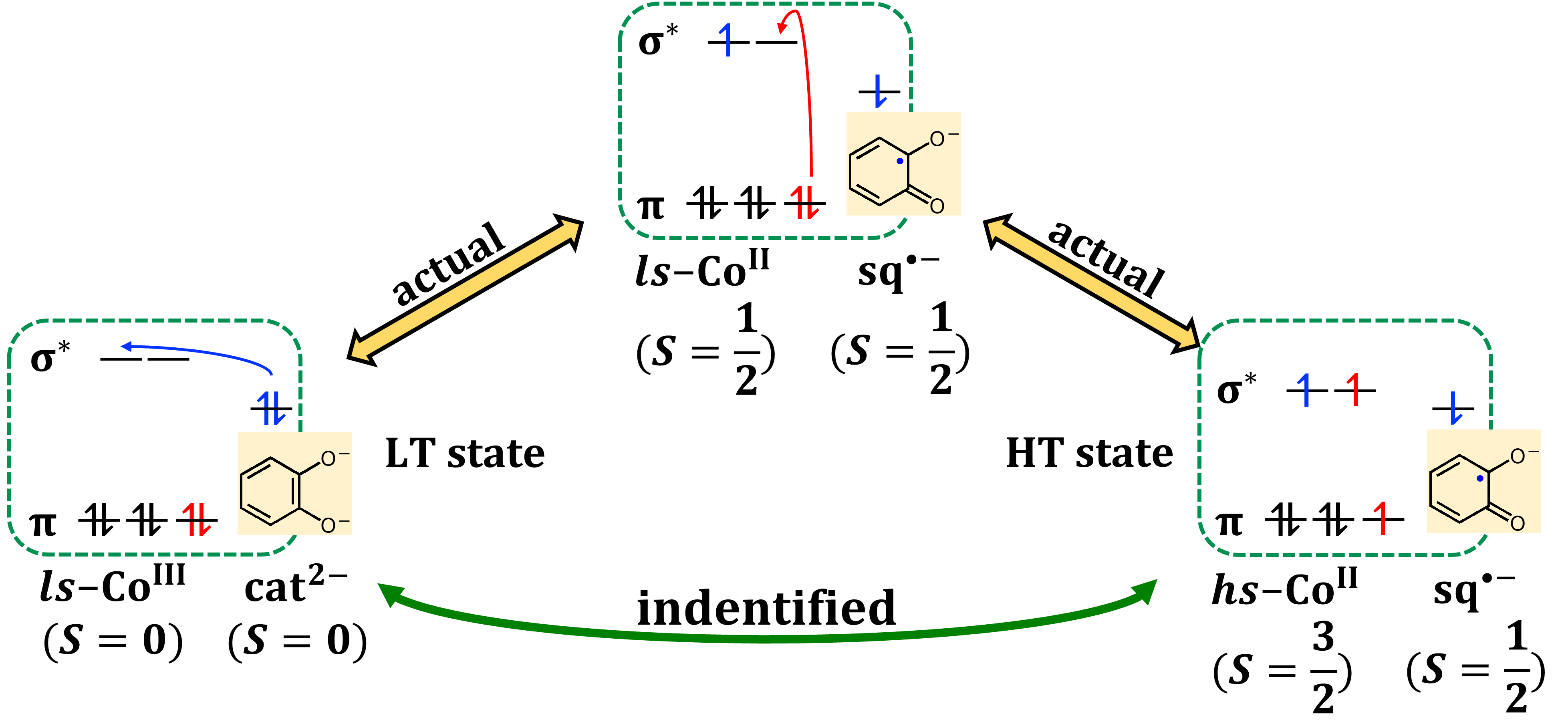
Figure 1. Electronic structures during the valence tautomeric transitions
A landmark in the modern era of VT came in 1980, when Pierpont and colleagues reported a temperature-induced equilibrium in a cobalt-diimine bis(quinone) complex, now recognized as the first example of a VT equilibrium in a coordination compound. In 1993, Hendrickson and co-workers obtained variable-temperature magnetic susceptibility data for a cobalt-semiquinonate complex, demonstrating reversible VT in the solid state. Light-induced VT was discovered in 1995, followed by pressure-induced VT in 1996, establishing the phenomenon as a versatile platform for external stimulus control.
The structural consequences of the transition are substantial: metal-ligand bond lengths increase by approximately 0.11–0.23 Å as the VT transition populates the antibonding eg* orbitals of HS-Co(II). This pronounced structural change provides a reliable means of characterizing the VT state through crystallographic analysis.
The most promising applications of VT, like spin crossover, lie in the development of molecular switches and multifunctional materials. Particularly, the spin-state dependence of electronic transport properties has been demonstrated for coordination polymers of cobalt-bis(dioxolene) valence tautomers, suggesting their potential as active materials in spintronic devices that couple magnetic bistability with electrical conduction.
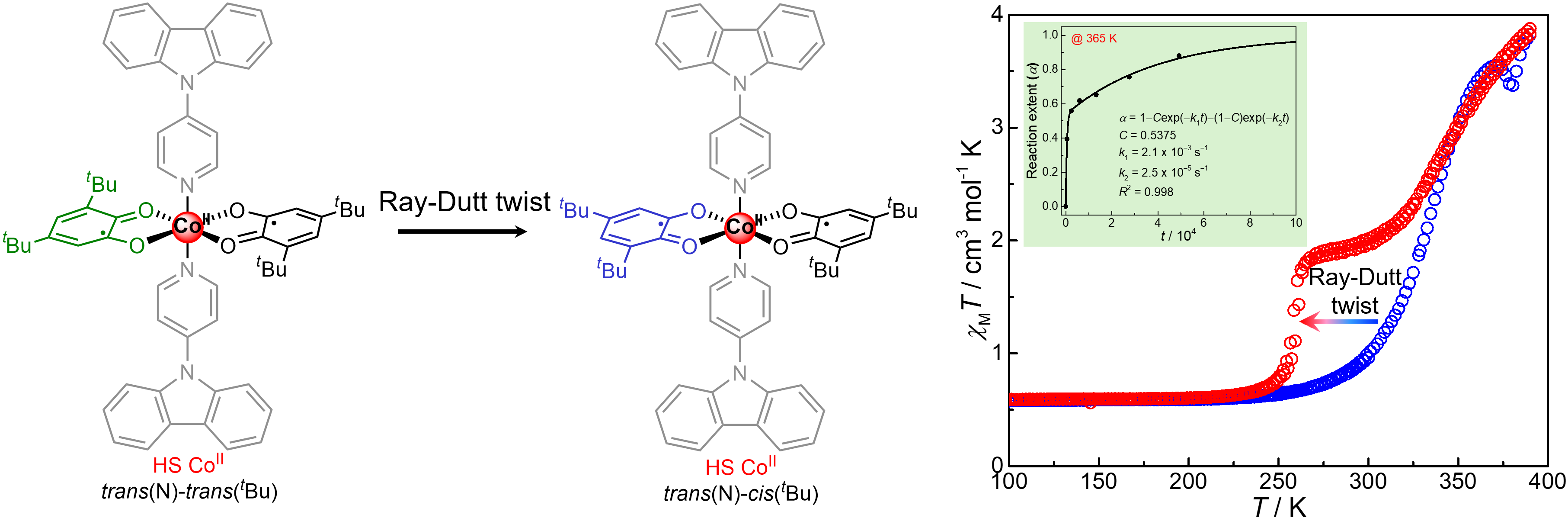
Figure 2. Molecular twist-induced structural transformation couples with VT
We have recently made significant contributions to the field of VT, particularly in cobalt-dioxolene systems, mainly focusing on the precise control of VT behavior through ligand design, structural isomerization, and host-guest interactions. For example, we recently contributed a landmark discovery of a molecular twist-induced single-crystal-to-single-crystal isomerization in a mononuclear cobalt-dioxolene VT complex (Figure 2). This work demonstrated for the first time that solid-state structural isomerization can be used to manipulate and switch VT behavior, providing a novel strategy for tuning bistable molecular materials.
We also have extended VT research toward multifunctional materials. For example, we demonstrated synergistic VT and fluorescence emission in a two-dimensional coordination polymer, where energy transfer from a tetraphenylethylene-based ligand to the semiquinone moieties was experimentally and theoretically verified. Additionally, by systematically introducing methyl groups into the ligand framework, they tuned the magnetic properties of dinuclear cobalt-tetraoxolene compounds from VT behavior to strong ferromagnetic coupling, revealing how steric rigidity and electronic effects dictate the energetic landscape of different electronic states.
Selected Publications:
Angew. Chem., Int. Ed. 2024, 63, e202401950.
Inorg. Chem. 2025, 64, 4964-4972.
Inorg. Chem. Front. 2023, 10, 7251-7264.
Chem. Commun. 2022, 58, 13903-13906.
Inorg. Chem. 2022, 61, 4428-4441