
Bistable Materials: 3) Dynamic Crystalline Materials
 分类:research
 作者:
作者:
 发布时间:2026-09-27
Dynamic crystalline materials—special bistable materials of molecule-structural origin—are a unique class of condensed-phase matter that combines the ordered, periodic structure of a crystalline lattice with components capable of displaying dynamic behavior in the solid state. Unlike conventional crystals, which are typically rigid and static, these materials can undergo controlled motion or structural transformation in response to external stimuli while largely maintaining their macroscopic integrity.
At their core, dynamic crystalline materials are single crystals that exhibit mechanical responses—such as bending, twisting, jumping, or expansion—on macro-, micro-, or nanoscopic scales when triggered by stimuli like heat, light, mechanical stress, or chemical vapors (Figure 1). This behavior challenges the classical perception of crystals as brittle and immobile solids. The field is sometimes referred to as "crystal adaptronics", emphasizing the goal of harnessing these adaptive properties for functional applications.
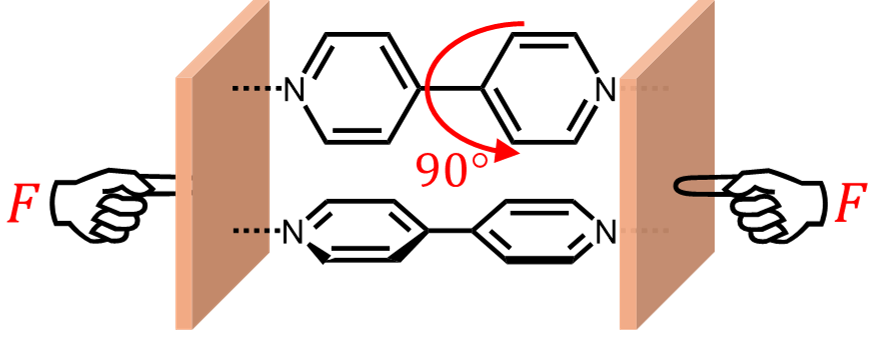
Figure 1. A dynamic crystalline materials originated from force-triggerred molecular rotation
The macroscopic motility of these crystals originates from molecular-level events that are amplified through cooperative processes within the densely packed lattice.
The most common underlying mechanism is a single-crystal-to-single-crystal (SCSC) phase transition. When an external stimulus is applied, the molecules within the crystal rearrange into a new crystalline phase. Because the crystal remains a single entity, this rearrangement generates internal stress at the interface between the parent and daughter phases. If this stress exceeds the cohesive forces of the lattice, it is released as mechanical motion. A particularly striking manifestation is the thermosalient effect, where rapid martensitic-like phase transitions cause crystals to suddenly jump or shatter. This occurs when the elastic energy accumulated during the transition is released explosively, propelling the crystal.
The ability of these materials to convert external stimuli directly into mechanical work or other functional outputs has opened several promising application avenues, such as energy conversion and actuation, sensors and switches, soft robotics and artificial muscles, and fundamental science.
Our work primarily focuses on molecular-based single crystals that exhibit mechanical responses and multifunctional coupling under external stimuli (Figure 2). By engineering crystal structures, we amplify microscopic molecular motions—such as rotation or ligand elimination—into macroscopic crystal deformation or switching of physical properties.
In 2019, we reported a material that achieves giant thermal expansion in a single crystal driven by molecular "precession". In the crystal lattice, imidazolium cation undergoes directional rotation/precession in response to temperature changes. This motion leads to an exceptionally large positive thermal expansion coefficient (α = 839 × 10⁻⁶ K⁻¹) along one direction and a giant negative thermal expansion (α = −363 × 10⁻⁶ K⁻¹) in the perpendicular direction.
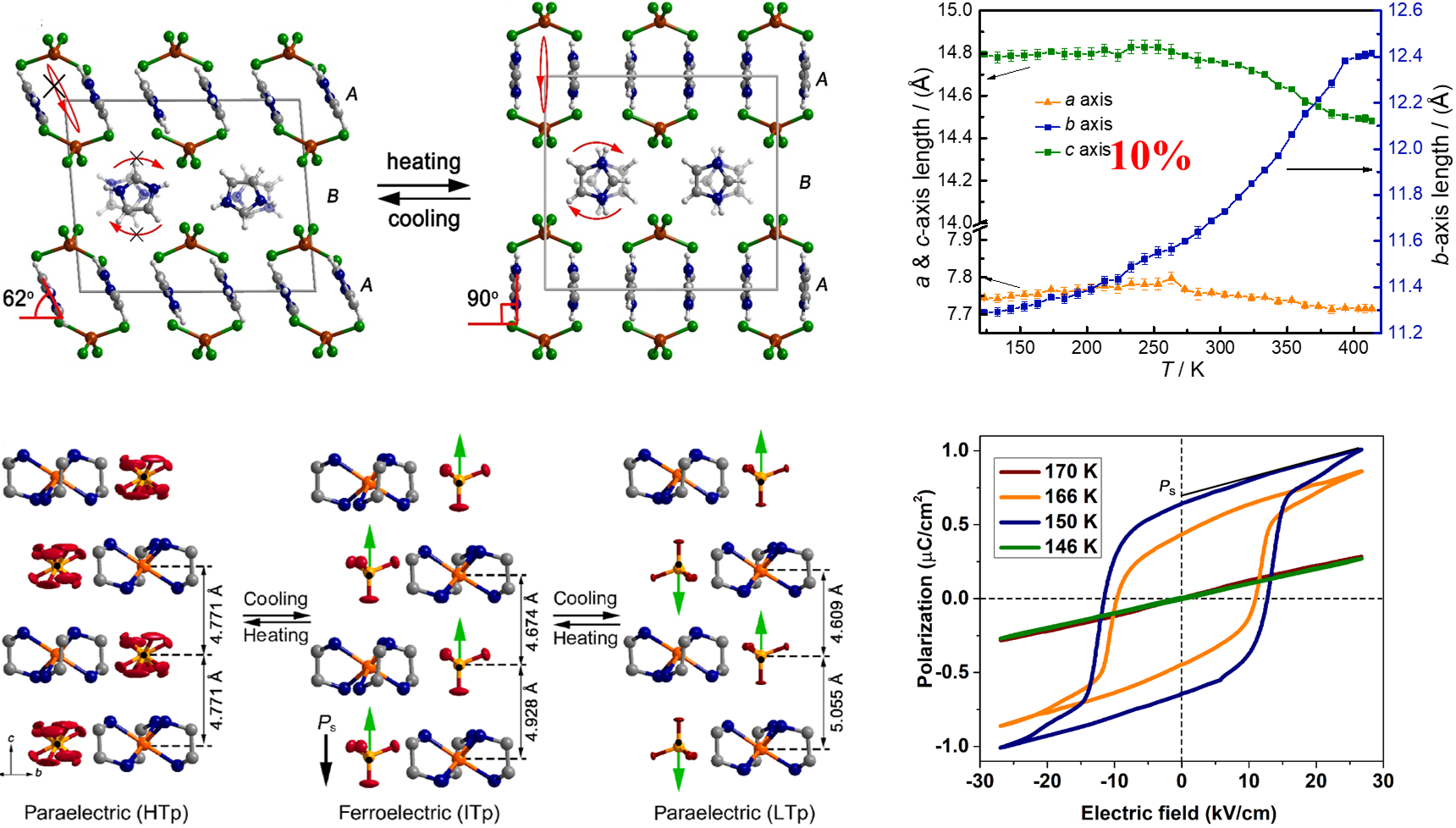
Figure 2. Mechanical and ferroic properties of dynamic crystalline materials with cationic and anionic rotations
In 2023, we synthesized a superelastic organic single crystal and demonstrated that under shear stress, 4,4'-bipyridine molecules undergo a 90° rotation around hydrogen-bonding axes, enabling diffusionless deformation and rapid recovery of the single crystal. More importantly, this molecular rotation alters the distribution of transition moments within the lattice, causing a reversible inversion of the material’s linear dichroism signal under stress.
More interesting, we recently found that chirality and ferroelectric polarization could be synergetically controlled by electric field in a two-dimensional perovskite crystal. We utilized the correlation between the helical orientation of the –C–S–S–C– fragment in cystamine organic cations and the molecular electric dipole moment to achieve simultaneous switching of molecular P–M helicity and ferroelectric spontaneous polarization through an electric field.
Overall, by precise manipulation of molecular motion, we have explored multifunctional mechanical, optical, electrical, and magnetic responses at the macroscopic scale, laying important material and theoretical foundations for applications of dynamic crystalline materials in flexible actuators, smart sensors, and optoelectronic devices.
Selected Publications:
Matter 2023, 6, 1639-1653.
J. Am. Chem. Soc. 2023, 145, 5545-5552.
Angew. Chem., Int. Ed. 2023, 62, e202217977.
Nat. Comm. 2019, 10, 4805.
Chem. Commun. 2020, 56, 2071-2086. Feature Article